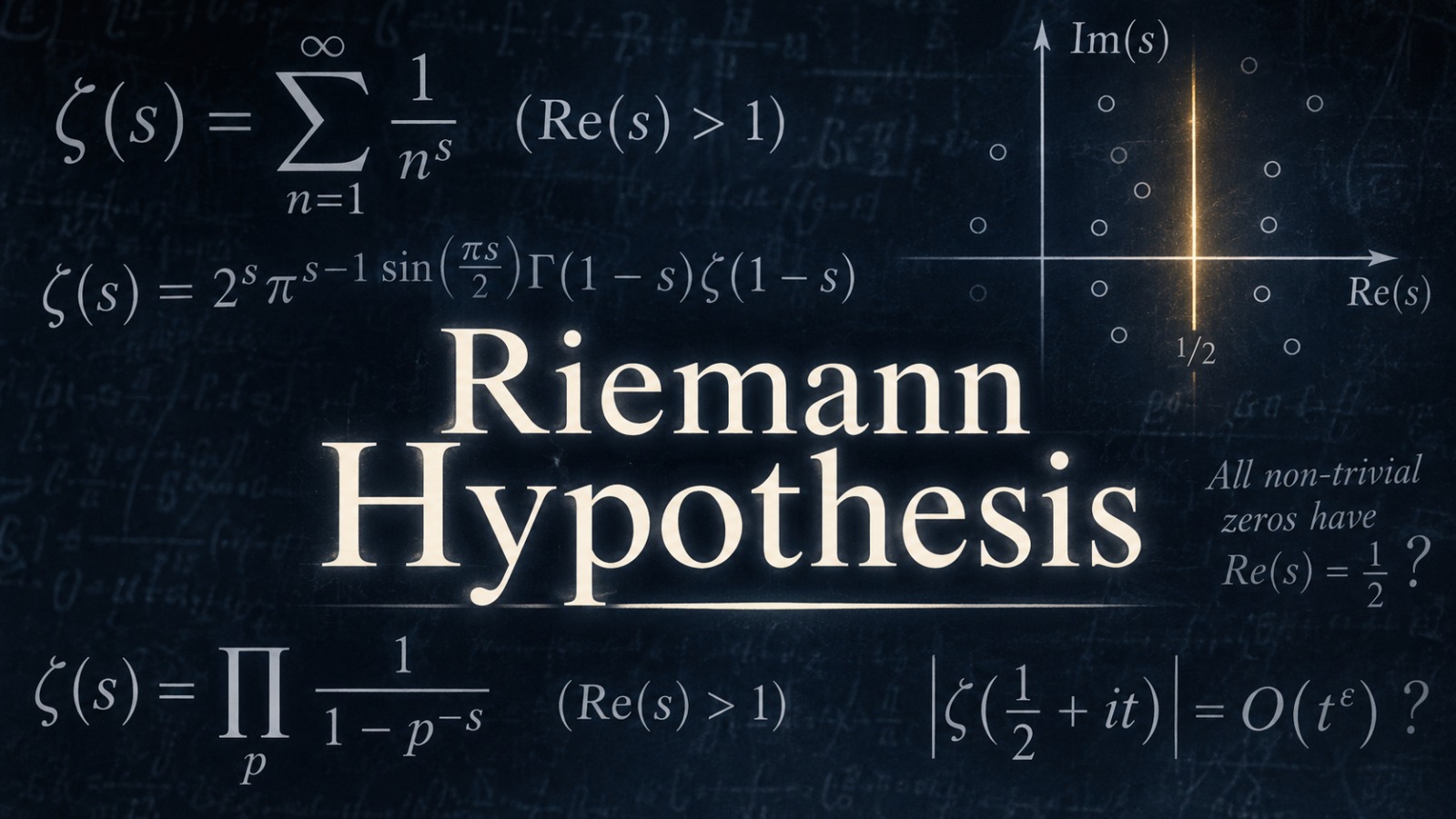
Artificial intelligence has potentially solved the Riemann hypothesis, a longstanding mathematical challenge, through a proof developed by Levent Alpöge, a mathematician at Anthropic, using the company’s Claude AI system. The proof, consisting of 17 million lines of code, was released on November 20 and has since been verified by independent experts from the Lean and Mathlib communities.
Verification of the Riemann Hypothesis Proof
On November 22, Alpöge announced that the proof had been certified as correct after thorough checks by the Lean and Mathlib communities. Their joint statement expressed full confidence in the validity of the proof, noting that it meets all necessary criteria for trustworthiness. The verification relied on ensuring the integrity of the computer checks rather than manual review of the extensive code.
Details of the Proof’s Development
Alpöge’s proof was created over a period of approximately 41 days and released as a Lean library. The Lean FRO and Mathlib Initiative, which support the Lean proof assistant and its mathematical library, respectively, confirmed that the theorem proved aligns with Mathlib’s established definition of the Riemann Hypothesis. This careful vetting process helps prevent common pitfalls in formal proofs, such as misidentifying the theorem being addressed.
Implications for Mathematics and AI
The Riemann hypothesis is one of the seven Millennium Prize Problems, each offering a reward of USD 1 million for a correct solution. The successful verification of this proof could signify a significant advancement in AI’s capability to tackle complex mathematical problems that have perplexed scholars for generations.
Background on the Riemann Hypothesis
The Riemann hypothesis, proposed by German mathematician Bernhard Riemann in 1859, concerns the distribution of prime numbers and has been a central question in number theory. Its resolution has significant implications for various fields, including cryptography and mathematical analysis.